Home-based care mergers and acquisitions are changing, not only in how buyers value companies, but also in how buyers and sellers work together after a deal closes.
EBITDA alone no longer defines a home-based care company’s worth, and sellers do not always leave after deals, industry experts said at Home Health Care News’ FUTURE conference panel. Instead, the focus has shifted to sustainable organic growth and buyer-seller partnerships after acquisitions.
For prospective sellers, that means demonstrating more than strong earnings.
“If you’re showing organic growth and infrastructure, and that you’re building your team, your value’s going with it,” said Dustin Distefano, chief operating officer of franchise operations of A Place At Home.
Omaha, Nebraska-based A Place At Home provides non-medical in-home care, care coordination, Alzheimer’s and dementia services and other healthcare offerings across 22 states.
EBITDA can look good on paper, but it does not necessarily show organic growth, Distefano said. He encourages A Place At Home operators to demonstrate real, sustained growth rather than settle into a comfortable plateau.
“I’ve used this new M&A organic growth model to say, ‘You guys are showing staleness, your value’s going down in my book,’” Distefano said.
In Aveanna Healthcare Holdings (Nasdaq: AVAH) CEO Jeff Shaner’s view, slower growth, powered by strong clinical outcomes, is preferable to chasing faster growth without the same commitment to quality.
Financial outcomes correlate with strong clinical results, Shaner said at FUTURE, which is why he looks for businesses built on a long-term commitment to clinical excellence rather than short-term financial wins.
“I would personally take a slightly lower-growing business [if it’s] a better-quality business than a faster-growing business that I don’t think has the same lift to quality,” Shaner said.
Aveanna Healthcare, based in Atlanta, provides home healthcare, hospice services, private duty nursing and medical solutions within 39 states. The company closed on its $175.5 million acquisition of Family First Homecare in June, growing its footprint by 27 locations spread across seven states.
Leadership and culture also influence whether a buyer sees a business as ready for its next phase of growth, said Bill Mixon, executive partner at Waud Capital. As investors become more selective and prioritize alignment with their firm’s investment thesis, demonstrating long-term growth — and effective leadership to foster it — matters more than ever, Mixon said.
“If you go into a management presentation and the team is just not cohesive, and there’s no sense of the culture, it’s hard to get to the rest of the conversation,” Mixon said. “You immediately have to start talking about, well, what are we going to do to make sure that we have the right leadership team in this business?”
Chicago-based Waud Capital Partners is a private equity firm that has completed more than 480 investments since its founding in 1993.
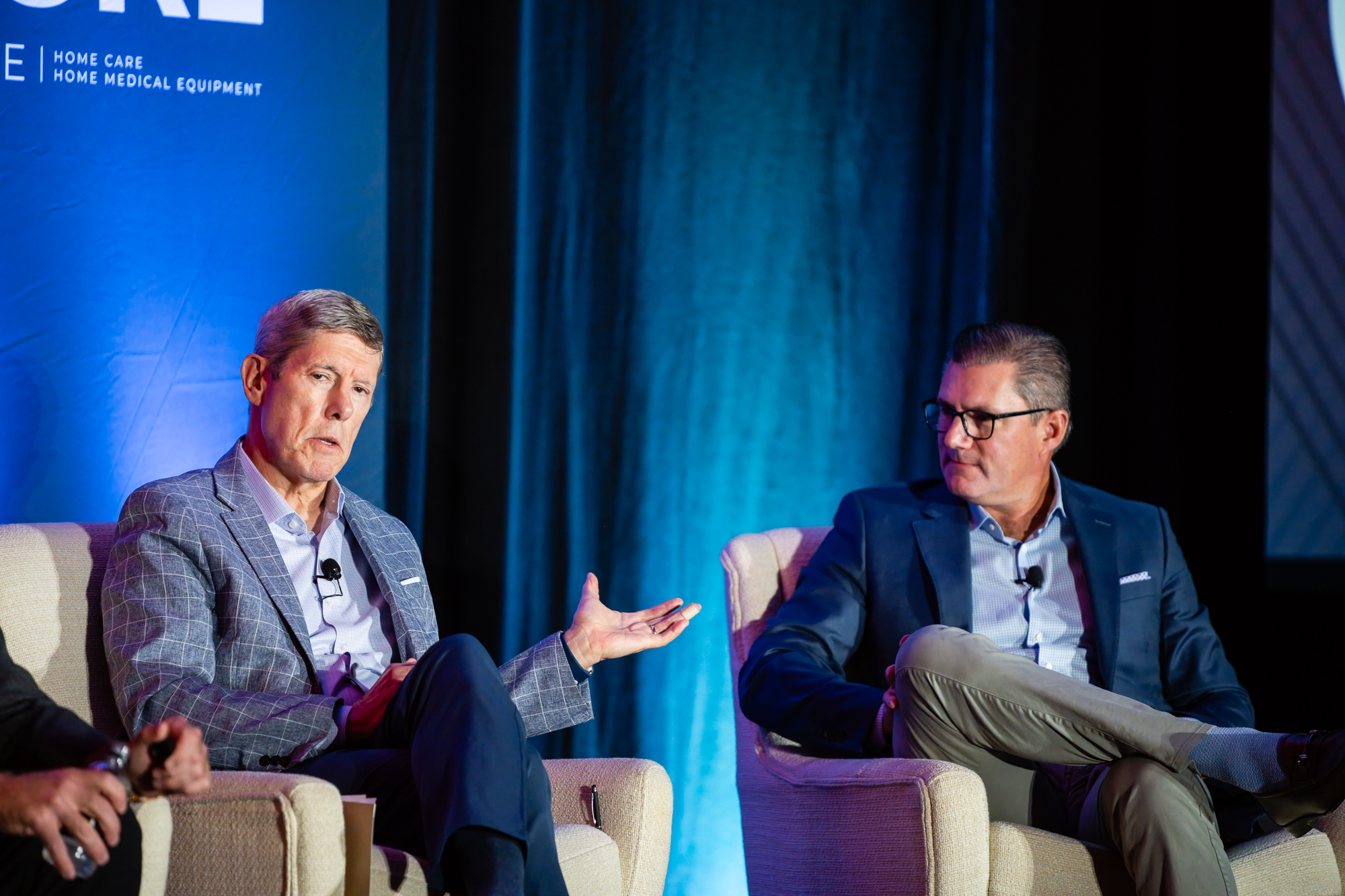
A shifting buyer-seller relationship
As valuation philosophies shift, so too are post-deal relationships. Historically, a sale often meant the seller collected the proceeds and stepped away, Shaner said. Now, buyers are increasingly keeping the acquired companies’ executives on board as operating partners.
Aveanna aims to make sellers equity owners and leaders in the acquired operations, giving them a continuing stake in the business’s performance.
“Although you’re trying to optimize or maximize absolute value down to the last penny, you’re also sitting in the boardroom the next time the board meets, and you talk about the success of the company,” Shaner said. “We want this to be a win-win for both of us.”
Distefano is one example of a co-founder staying on the leadership team after an acquisition. A Place At Home was acquired by European home care giant Dovida in February. Distefano, co-founder of A Place At Home, was named COO following the deal’s close.
That approach extends to A Place At Home’s joint venture strategy: Franchise owners can retain minority ownership stakes and continue as general managers, making a sale a transition rather than a complete exit.