
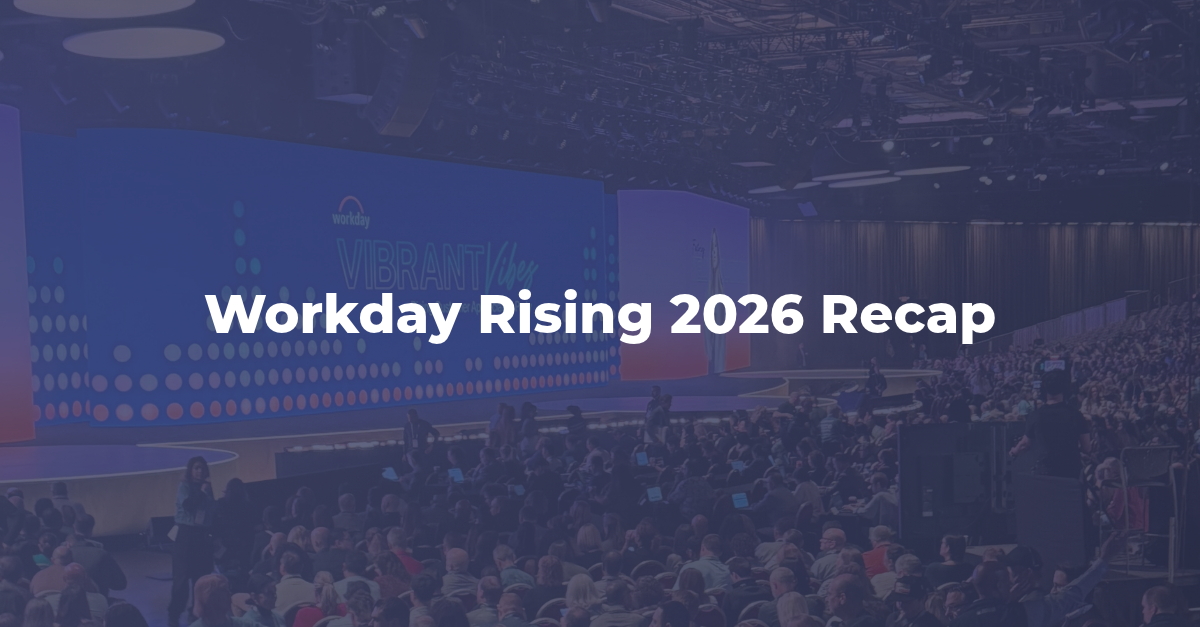
Workday made several announcements on October 13 in Las Vegas. Sana became the new Workday Home, and the agent platform opened to outside AI agents. Decision Intelligence spread across HR and finance. Autopilot agents debuted for payroll, accounting, deployment and recruiting. Workday also agreed to acquire C1.ai, an agentic identity platform, and announced a partnership with Anthropic.
The same week, Healthcare IT Leaders hosted connects with leaders from 22 hospitals and health systems at Workday Rising 2026. Some went live in 2012. Others go live in 2027 and 2028. Most run Workday beside an Epic or Oracle Health EHR and UKG timekeeping. We asked each one what eats up their team’s time. Nobody struggled for an answer.
Here is what each announcement does and how it could impact a health system.
Sana Becomes the Front Door
Sana is the new conversational home screen. Employees ask for what they need in natural language. Sana orchestrates Workday agents to complete the work. Sana Concierge resolves HR and IT requests directly. Sana Home is available now, but admins choose when to enable it. Sana Concierge is with early adopters, with general availability expected in the first quarter of 2027.
Adoption was the most repeated word at our networking connects, narrowly beating “Excel.” One Human Resources Information System leader said most end users do not know what they already own. That makes it hard to choose what comes next. Another has watched $3 million in savings turned down because the change felt too hard. A nurse manager approving timecards at shift change will not learn a new front door from an email. They will tell you so.
Sana lowers the barrier to using Workday. Rolling it out is a change event that needs the same at-the-elbow support as your go-live.
Autopilot Agents Arrive in Stages
The Talent Acquisition Agent is available to early adopters today, with general availability planned for early 2027. Payroll, Accounting and Deployment autopilots are planned for early adopters in early calendar 2027.
Health system payroll carries shift differentials, on-call pay, union rules and per diem agreements. That makes it among the most audited processes in the organization. It is also the process most likely to prompt a hallway conversation with the CFO.
Health Systems in discovery for 2028 told us sustainment is not in the conversation. No one is training several hundred shared services staff. Autopilots change that work and still need people to review it. Continuous Managed Services can carry sustainment while your team builds support skills.
Workday frames oversight three ways. Humans stay in the loop for hiring. They sit on the loop for travel and expense approvals. They step out of the loop for transaction sampling and accounting checks. Each health system needs its own version of that table for payroll, supply chain and physician compensation. Bring internal audit into the design session from the start.
Decision Intelligence Replaces the Export
Decision Intelligence now spans the full Workday portfolio. Teams ask a question in plain language and get an answer grounded in live data. They compare options and act within existing Workday permissions. It is available now to Workday HCM and Financial Management customers.
Four health system leaders in our discussion named the same magic wand: get RVU and physician compensation out of Excel. One assistant controller calls her workbooks “Excel masterpieces.” One rural hospital runs annual compensation for about 4,000 employees by hand.
Decision Intelligence can serve the executive dashboard request. An agent reasons only over logic configured in Workday, so the compensation model has to move first. The spreadsheet will not volunteer.
The Trusted Agent Platform Opens Workday to Outside Agents
The Trusted Agent Platform lets teams build and run agentic AI against Workday HR and finance data. Those agents can read and write Workday data directly, using the tools, models and frameworks teams choose. Every action stays bound to Workday permissions, approvals and audit trails. Agent Harness, Agent-Ready Tools, Custom Agents, Developer Agent and Data Cloud are generally available now.
One health system leader also shared they run roughly 270 integrations. And another maintains layered data warehouses to reconcile Epic, UKG and Workday. Time punch data does not line up with the clinical schedule. Agents working directly against Workday data over the Model Context Protocol (MCP) could retire some of that plumbing.
It also widens what can change data. One analysis counts 275 read tools and 54 write or delete tools in the Agent-Ready Tools catalog. That is 54 new ways to have a bad Friday. Health systems cannot tolerate payroll downtime, so integration teams now need MCP, Extend AI and agent identity skills.
Flex Credits Set the Cost Model
Flex Credits are Workday’s usage-based currency for AI. You buy an annual pool, and every metered agent action draws it down. Workday publishes the credits each action costs and leaves the price per credit unstated. Its one published example puts information retrieval at one credit and autonomous task completion at five credits.
The console alerts at 80%, 90% and 100% of your threshold. Workday does not deactivate offers when you pass it. The alert is informational. So is a smoke detector.
Every leader at our lunch table raised this. One described a per-API-call credit model starting in February, with external vendors driving call volume. Health systems under Medicare and pharmacy reimbursement pressure cannot carry a cost they cannot forecast.
Actions to Consider After Workday Rising
One theme throughout our connects was the need for sustainment.
Releases are pushed twice a year, and one system has hundreds of Adoption Planner items in backlog and no staff to work them. The calmest leader in the room, unprompted, credited her application management services (AMS) partnership with Healthcare IT Leaders for keeping her team current while short-staffed.
Agents add to that load; the five actions below assume someone owns it.
- Treat Sana as a release, not a toggle: set a date, plan training and communications, and pilot one group to see adoption and credit draw before everyone gets it.
- Before an autopilot touches payroll, decide which steps need a person in the loop, which need one watching, and which can run alone. Name one owner for agent permissions and bring internal audit in at the start.
- Move RVU and physician compensation logic out of Excel and into Workday; Decision Intelligence can only reason over what is configured there.
- Inventory integrations, flag the ones a Workday agent could replace, and plan for the MCP, Extend, and agent identity skills needed to manage the rest.
- Before buying Flex Credits, get the dollar price per credit in writing, set alerts below Workday’s defaults, name who acts when one fires, and start the 2027 autopilot pricing conversation now.
Frequently Asked Questions
What Is Workday Sana?
Sana is Workday’s conversational home screen, where employees ask for what they need in natural language. Sana Home is available now, and Sana Concierge should reach general availability in the first quarter of 2027.
What Are Workday Flex Credits?
Flex Credits are Workday’s usage-based currency for AI, drawn down by every metered agent action. Workday publishes the credits each action costs and leaves the price per credit unstated.
What Is the Workday Trusted Agent Platform?
The Trusted Agent Platform lets teams build and run agentic AI that reads and writes Workday data. Every action stays bound to Workday permissions, approvals and audit trails.
How We Can Help
Healthcare IT Leaders supports health systems across the full Workday lifecycle. Strategic Advisory Services cover program governance and adoption strategy. Delivery and Transformation Services provide workstream leadership, integration design and go-live support. Continuous Managed Services handle production support and release management for Workday updates. Staffing and Talent Services supply Workday staff augmentation for backfill and project capacity.
Learn more about our Workday consulting services or use the Workday Staffing Guide to size your team.
Let’s Connect
Planning for Sana, autopilots or Flex Credits? Let’s talk.